

Closing in Kissimmee Before January 1? Homestead Timing Explained
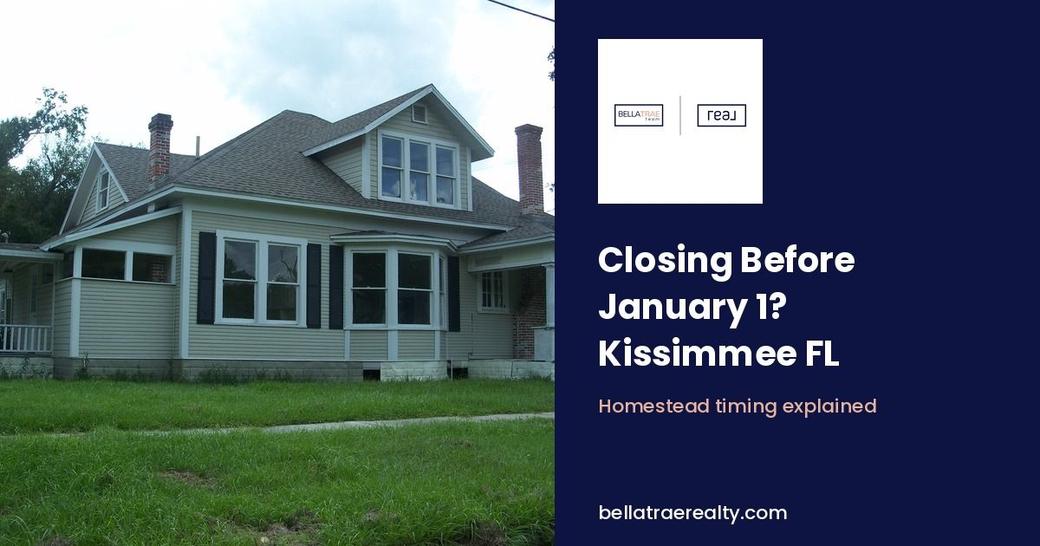
A buyer who closes on a Kissimmee or St. Cloud home and lives in it by January 1, 2027 can apply for the 2027 Florida homestead exemption. Florida law ties eligibility to ownership and permanent residence on January 1, and the application is due to the county property appraiser by March 1. Close and move in on January 2, and the first exemption year becomes 2028.
This guide explains how that timing works for buyers in Osceola County, as of November 2026. It is general education. The Osceola County Property Appraiser decides who qualifies, and a CPA or attorney is the right source for your own tax situation.
What the January 1 Rule Says
Section 196.031 of the Florida Statutes grants the exemption to a person who, on January 1, holds legal or beneficial title to Florida property and in good faith makes it a permanent residence. Both parts have to be true on that date. Owning the home on December 15 while still living in another state on January 1 does not meet the test.
The Osceola County Property Appraiser lists the same requirements for its applicants: recorded title in Osceola County, residence on the property, permanent Florida residency, and U.S. citizenship or a permanent resident card, all as of January 1.
Why a December Closing Matters
Homestead lowers the assessed value that property taxes are figured on. The Florida Department of Revenue describes an exemption of up to $50,000: the first $25,000 applies to all property taxes, including school taxes, and an additional amount applies to assessed value over $50,000 for non-school taxes. The Osceola County Property Appraiser lists the maximum at $51,411 for tax year 2026 because the second portion adjusts for inflation.
Homestead also starts Florida's Save Our Homes cap on future assessment increases. A buyer who qualifies for 2027 starts that protection a year earlier than a buyer who qualifies for 2028. For a family relocating to Kissimmee, that year can be worth planning a closing date around.
Building a Closing Timeline Backward From January 1
Your contract sets the closing date, and a financed purchase needs time for the appraisal, underwriting, inspections and title work. Our guide to the Florida contract-to-closing timeline walks through each step. Counting backward from late December, buyers who want a 2026 closing should be writing offers in November. Holiday schedules at lenders, title companies and county offices can stretch timelines, so build a few days of cushion into the contract.
Moving in matters as much as closing. Plan for the moving truck, utilities in your name and your belongings in the house before January 1. A closing on December 30 with a move-in after New Year's Day leaves the residency question open.
Proving Residency When You File
Osceola County accepts applications in person or online. Its regular filing window runs January 2 through March 1, and missing March 1 waives the exemption for that year under Florida law. The property appraiser's checklist includes a copy of the deed or a tax bill, a Florida driver license, Osceola County voter registration or an affidavit of residency, Florida vehicle registration and Social Security numbers for every applicant. Out-of-state licenses are not accepted.
Buyers relocating from another state should start the license and vehicle registration changes soon after closing. The application is Florida Department of Revenue form DR-501, and Osceola County's online filing service walks applicants through it.
Second Homes and Rentals
Homestead applies only to a permanent residence. The Florida Department of Revenue notes that a unit is no longer eligible once it is rented, once it stops being the owner's permanent home, or once the owner is no longer a permanent Florida resident. A buyer purchasing a vacation home near the Disney corridor in Kissimmee, or a long-term rental in St. Cloud, should budget for property taxes without the exemption.
The same rule affects buyers who plan to live in a home for a while and rent it out later. Renting the home can end the exemption, so talk to the property appraiser before signing a lease on a homesteaded property.
When January 1 Is Out of Reach
Some buyers will close in January or later, and that is fine. Osceola County accepts pre-filing for the coming year from March 2 through December 31, so a buyer who closes in spring 2027 can file early for 2028. The seller's homestead exemption usually stays on the 2026 tax bill, and taxes are prorated at closing, so ask your title company to show you that math on the closing disclosure.
Buyers who already hold a Florida homestead elsewhere and are moving to Kissimmee or St. Cloud can ask the property appraiser about portability, which can carry some Save Our Homes benefit to the new home when filed on time.
Bella Trae Realty helps buyers set a contract timeline around these dates, and our team works with Osceola County buyers in Kissimmee, St. Cloud, BellaLago and Harmony. Contact Bella Trae Realty today at (407) 557-8959 or bellatraerealty.com to plan your purchase.
Photo: "Kissimmee Hist Dist08" by Ebyabe, CC BY-SA 2.5, via Wikimedia Commons.
Categories
Recent Posts



GET MORE INFORMATION